Mark Twain once said, “Never let formal education get in the way of learning.” I was reminded of this quote at a recent alumni networking event at the University of Maine – Augusta.
I had the opportunity to share with the alumni my experiences since I graduated from the university in 1980. A key point of the discussion was that learning never stops, even once we leave school at any level.
THYME is a great teacher, and how we apply SAGE moments will only help with our success. Whenever I prepared for a class that I was teaching or a presentation for a medical convention, I always learned something new. Some were PAPRIKA moments; however, they enhanced my future experiences. Honestly, when you prepare to do a chapter program, are you not adding to your BASIL knowledge?
This new blog series has really spiced up my BASIL data banks.
When I saw LAVENDER on the list of available spices, I wondered how it made the list. As I read more about LAVENDER and looked at recipes, I was amazed.
What I always thought was just the fresh, clean scent that wafted through the house when I used a little too much laundry detergent, LAVENDER can actually be used to spice up certain recipes. Now you just had a PAPRIKA moment—yes, I will help with the laundry. In a future blog, I will refract on folding towels.
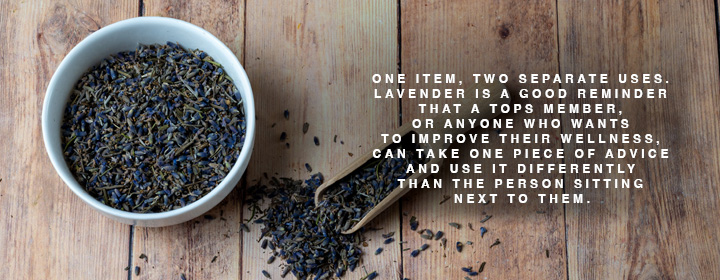
One item, two separate uses. LAVENDER is a good reminder that a TOPS member, or anyone who wants to improve their wellness, can take one piece of advice and use it differently than the person sitting next to them.
I am not wrong if I use LAVENDER only as something to make towels smell nice, and you’re not wrong if you use it as a spice to accent a beverage. The same goes for if a member chooses to use the scale every week or just once a month. It’s the same scale, just used differently for each of our own journeys.
LAVENDER dual use does not stop at the scale. Some members want recognition, others do not. Same item used differently. You know, there are other things we discuss in TOPS that can be adapted to fit whatever you need at the moment.
Life will always take a turn that we least expect. Being the oldest one at the alumni meeting, I advised them to never stop learning. Keep an open mind and most of your successes will come true. However, just like LAVENDER as a spice, you only need a little. Just a little knowledge can go a long way if you keep an open, supportive, non-judgmental attitude.
Next time, I will dig deeper into not going to the extreme in measuring our spice choices. I think CLOVE will be a good example, and I will tell you the towel story then.
Lavender (Lavandula angustifolia): Lavender is a fragrant culinary herb and spice made from the dried flower buds of certain lavender varieties. It has been used in cooking for centuries, particularly in Mediterranean and French cuisine. Its flavor is floral, slightly sweet and mildly citrusy, with subtle notes of mint and rosemary. When used sparingly, lavender adds a delicate aroma and complexity to foods. Too much, however, can produce a strong, soapy or bitter taste. Most recipes call for only ¼ to 1 teaspoon of dried culinary lavender because its essential oils are highly concentrated.
Lavender is commonly used in baked goods, desserts, beverages and fruit compotes. Only culinary-grade lavender should be eaten. Decorative or ornamental lavender may have been treated with pesticides or may come from varieties with a harsher flavor.
Lavender has long been valued for its fragrance and is widely used in teas, sachets, soaps and aromatherapy. While some people enjoy lavender tea for its calming aroma, evidence for specific health benefits remains limited, so it is best appreciated primarily as a flavorful herb rather than as a medicine.